CASE STUDY
Payment Issue Alerting
SUMMARY3% of Rakuten payments fail each quarter, affecting 510K members. The most common cause is having an incorrect address or external payment account information (PayPal, Amex, Bilt or bank account). At the time, we had no messaging on apps or web to surface these issues or tell members how to resolve.
Impact
I established a reusable alerting framework to leverage for future payment issues.
For the May 15, 2026 payment, we’ll track these success metrics:
Decrease number of checks processed for returns (lowering costs to business)
Reduce number of failed Amex and PayPal payments due to invalid accounts
Decrease volume of payments returned to member accounts
The Problem
Rakuten’s previous UX didn’t alert members when a payment failed, leading to:
Eroded member trust (Rakuten doesn’t deliver on its promise)
Increased Member Services tickets after the payment date
Additional costs reprocessing payments/mailing new checks
The original PRD outlined 20+ unique failure reasons across 3 payment methods (PayPal, American Express Membership Rewards® points and check), using highly technical terminology. This documentation made it difficult to understand:
Severity of the issue (will Rakuten attempt to send a repayment?)
What exactly went wrong
Steps member should take to resolve
My Role
I led content design for the account experience and email to define messaging hierarchy for different alert types, ensuring system-wide consistency across account UX and emails. I simplified a complex PRD into a prioritized, phased approach and aligned product, design and engineering legal stakeholders.
Key Decisions
DECISION #1
Not all payment issues need the same level of urgency. Without differentiation, members would either ignore alerts or feel unnecessary alarm.
Approach:
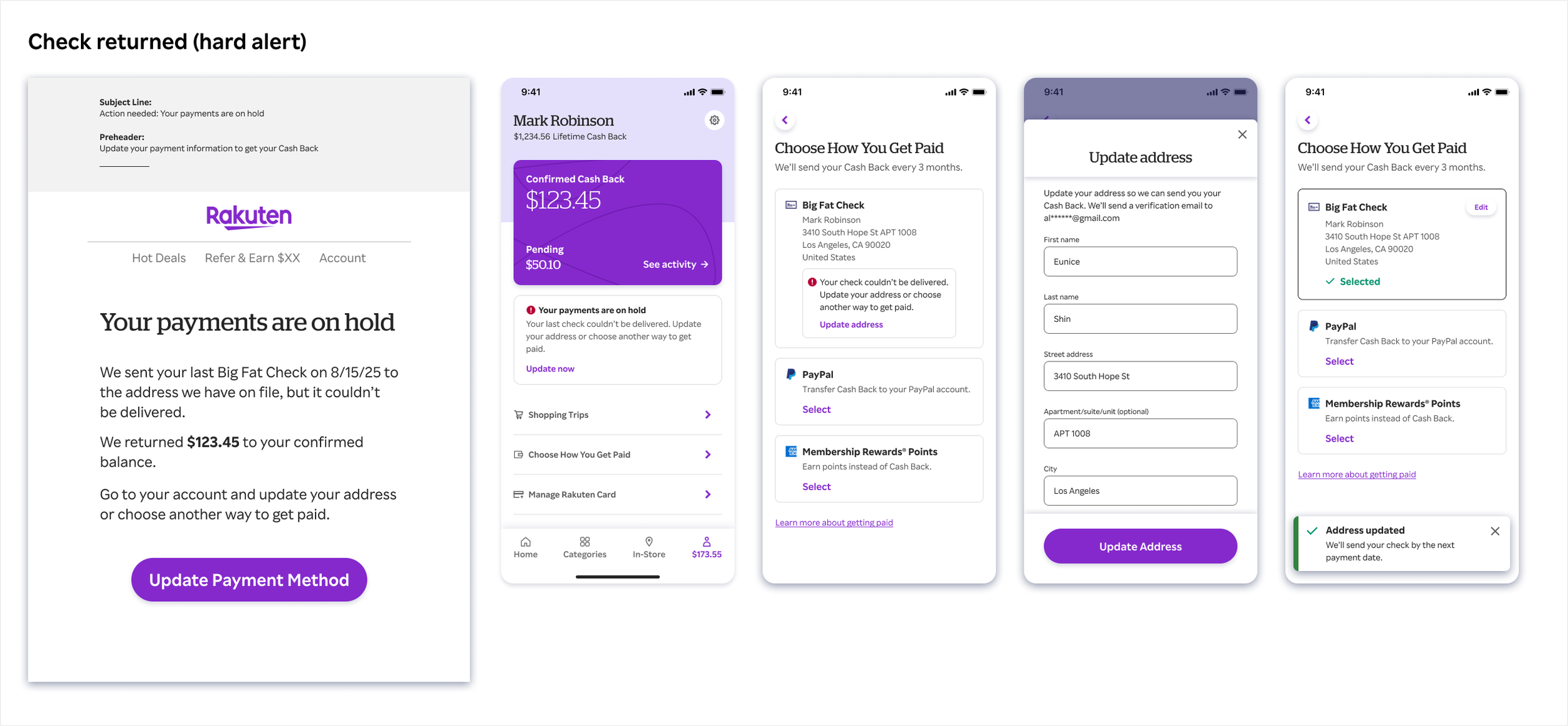
At first failure, Rakuten will automatically attempt repayment on the next payment date. If the payment failed 2+ times prior, the system pauses all future payments until the issue was resolved.
I designed a tiered system based on these different levels of urgency:
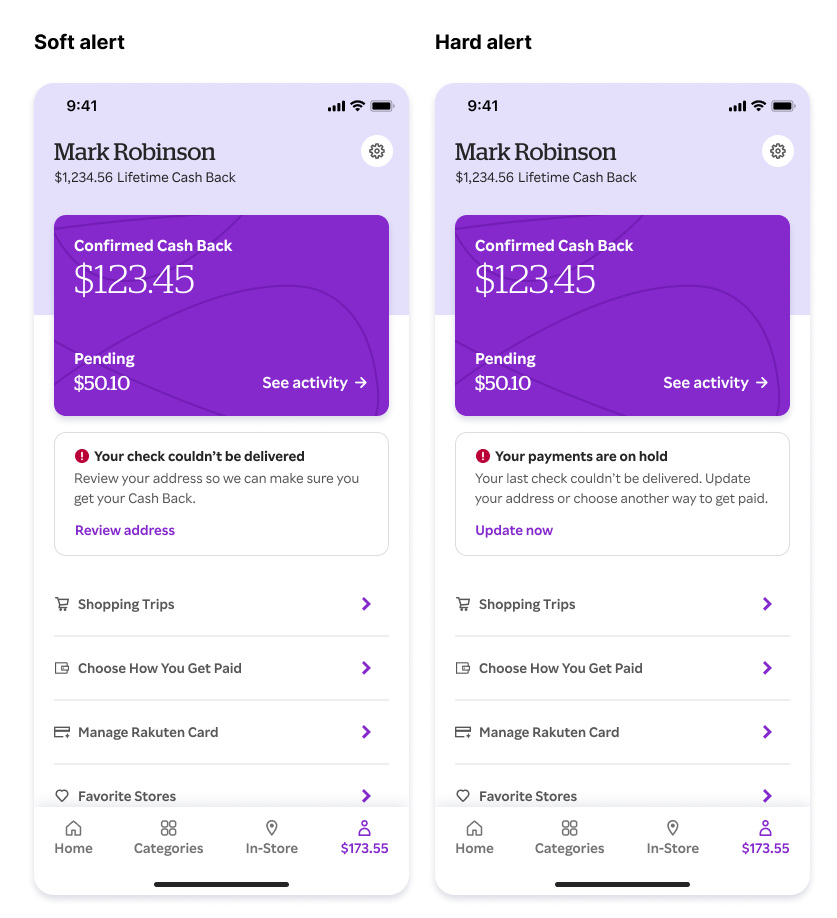
Soft alert (will attempt to pay again)
Tell member what went wrong in the headline.
Softer CTA: Review address
Hard alert (future payments paused until issue is resolved)
Message severity in headline: Your payments are on hold.
Urgent CTA: Review now
Both alerts:
Offer clear steps for resolution in body
Guide members with contextual messaging throughout the flow
Why?
Clear headlines = optimal scanability
CTAs support the appropriate level of urgency
Concise messaging keeps focus on what went wrong and how to resolve
Establishes a systematic content hierarchy and messaging structure
DECISION #2
Members might encounter a payment alert either through email or in-product. Messaging needed to work across channels regardless of which alert they see first.
Approach:
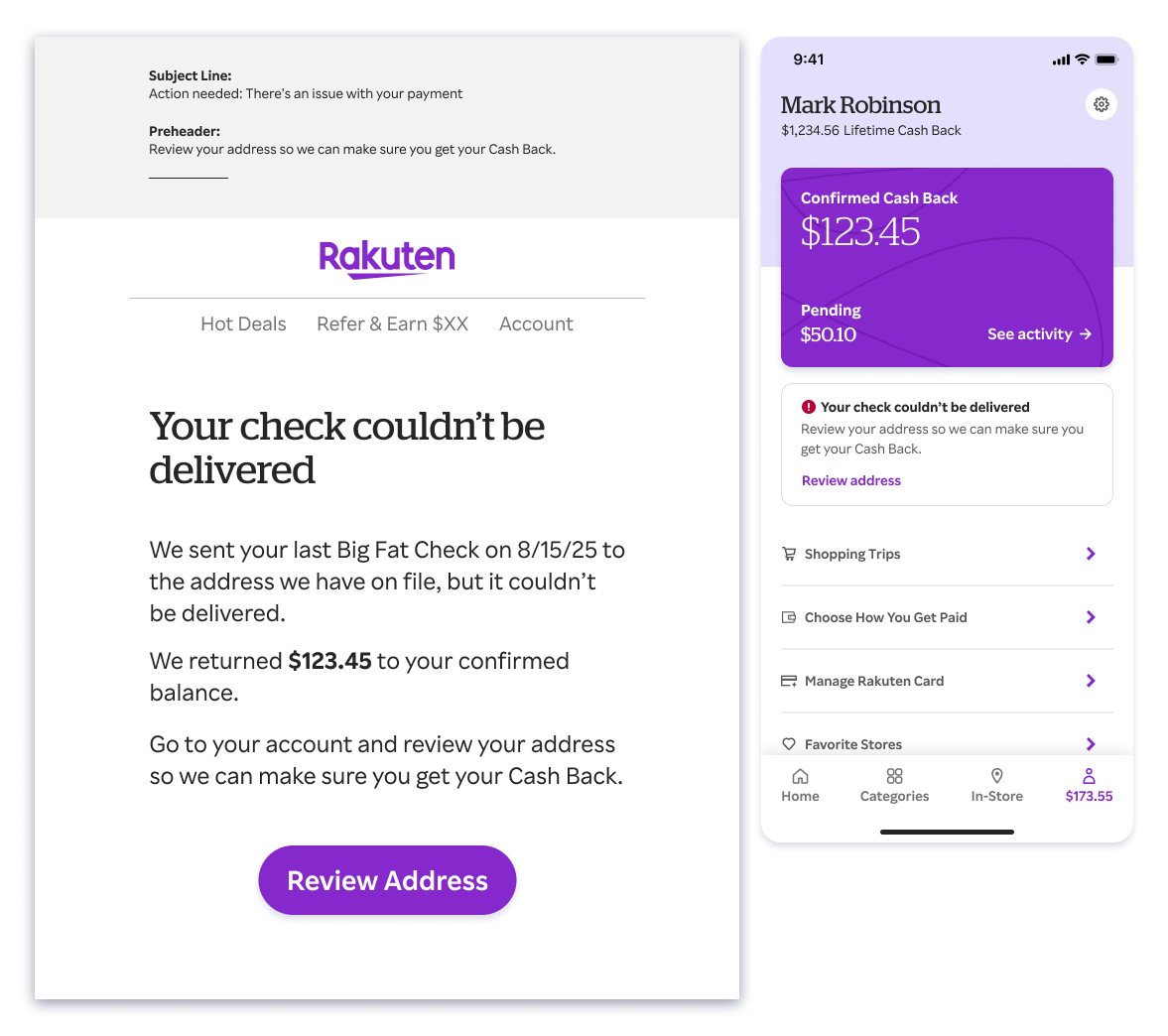
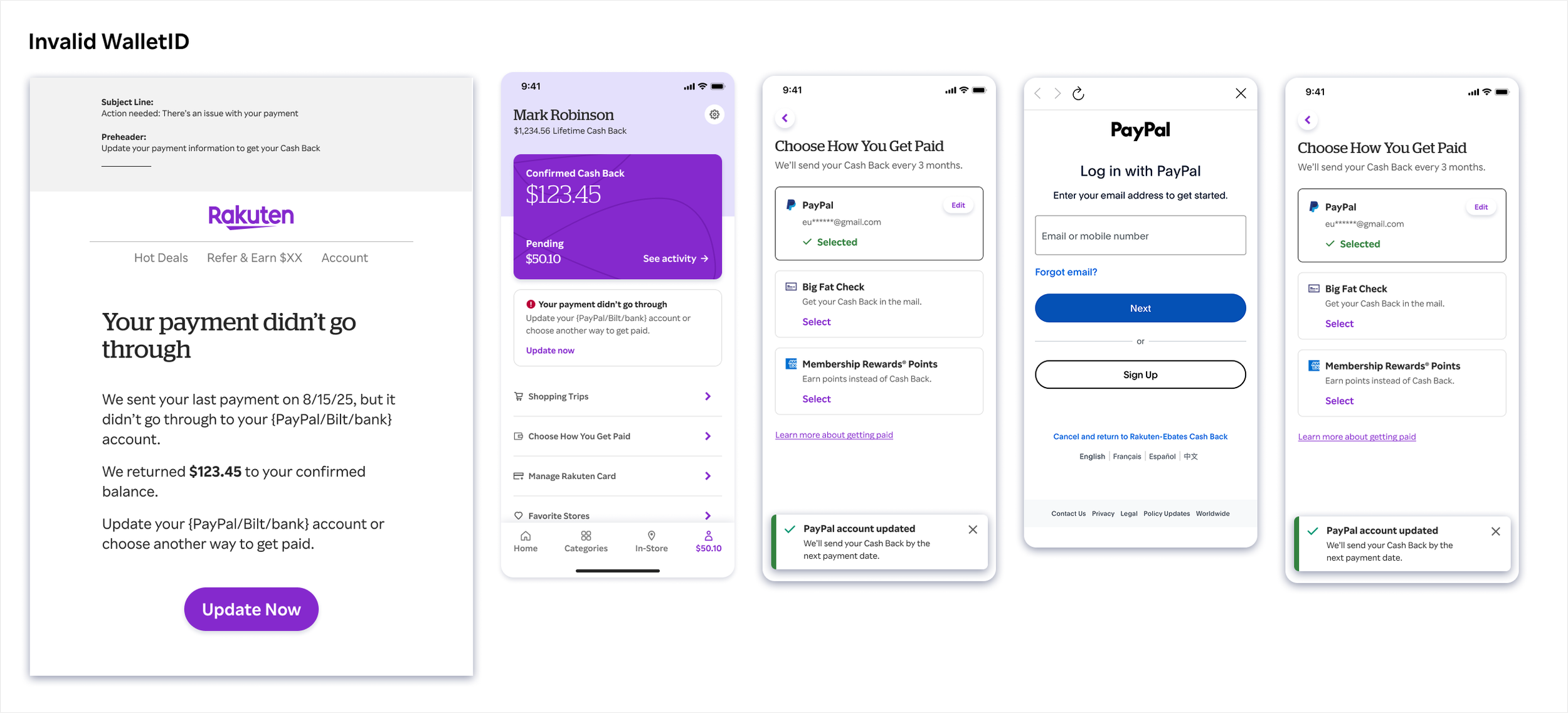
I created a unified messaging system across email and account UX.
When writing for different use cases and surfaces, it can be easy to drift. I maintained copy inventories of every use case across each screen in the flow to ensure I was establishing a consistent system. This made the review process smoother and was appreciated by stakeholders.
Why?
Reinforces clarity through repetition
Reduces confusion across email and account experience
Messaging contextual to member mental models for each surface
DECISION #3
With so many payment methods and use cases, our squad had a lot of messaging variants that were difficult to maintain.
Decision
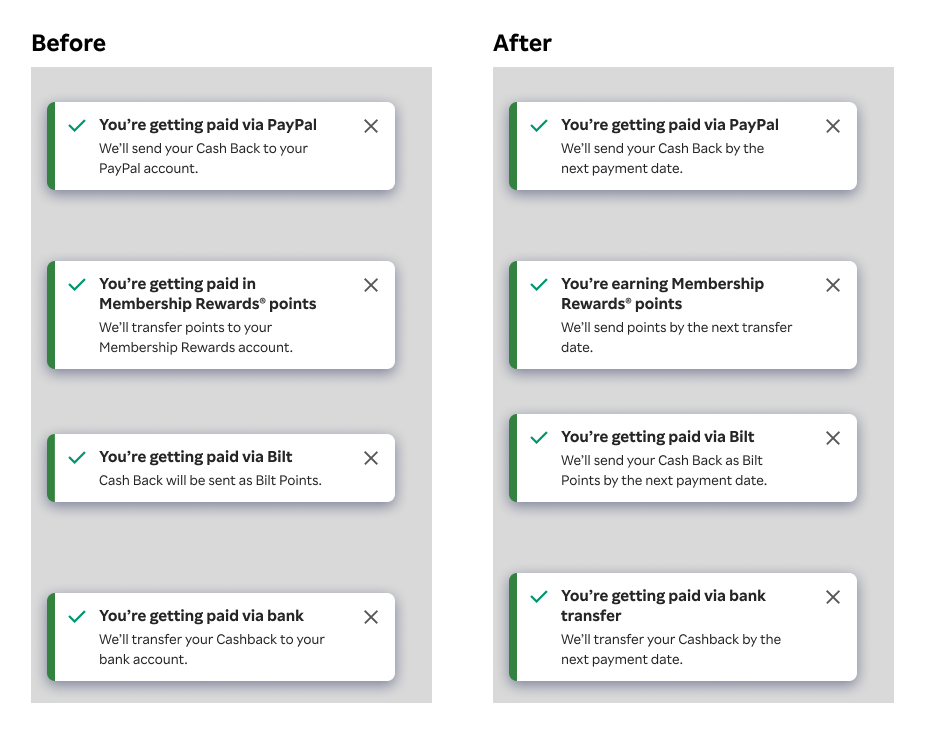
I updated the existing payment method selection success toast to work across all use cases:
Member selects a payment method for the first time
Member updates their payment method, i.e. re-linking their account
Why?
Fewer variants to update if requirements change
Predictable messaging builds trust with member
Solution
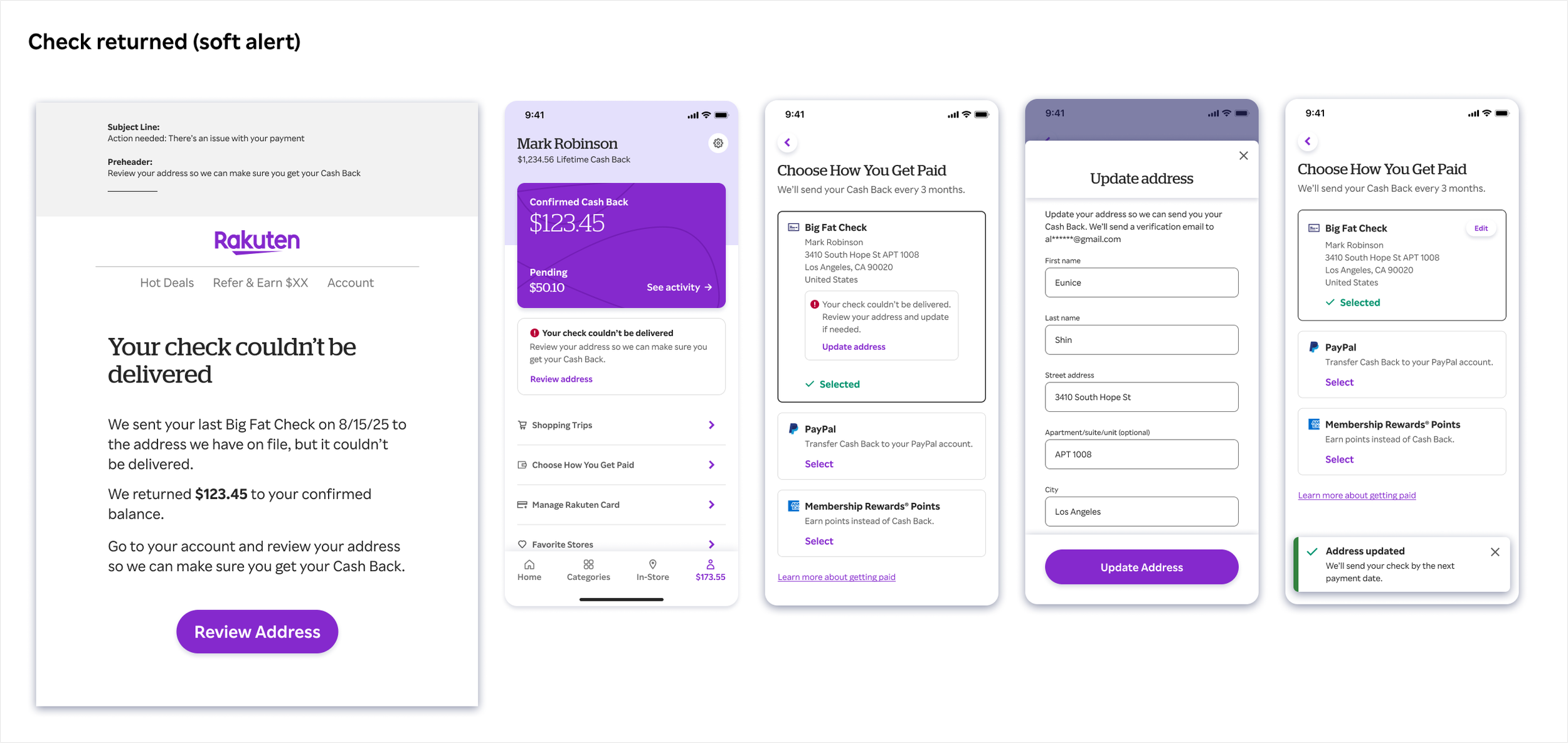
I designed a scalable messaging system that clearly alerts members about payment issues across product and email, and helps them resolve, reducing confusion and increasing the percentage of members paid.
Impact
Currently in development. For the next payment cycle, we’ll track:
Decrease number of checks processed for returns (lowering costs to business)
Reduce number of failed Amex and PayPal payments due to invalid accounts
Decrease volume of payments returned to member accounts
I also established a reusable alerting framework to leverage for future payment issues, and streamlined the payment method update confirmation toast to eliminate the need for an extra variant.